
Tulika Publishers: Rooted In India, Resonating Worldwide
For over two decades, Tulika Publishers has championed children’s books that reflect the diverse realities, languages, and cultural landscapes of India. While many independent publishers adapt their vision to suit international markets, Tulika has remained steadfast in its founding mission: creating authentic stories that speak to the varied childhoods experienced across the country. Sangeetha Menon, Rights Manager at Tulika Publishers, shares more in conversation with Varsha Verma of AABP.
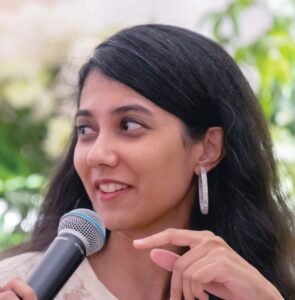 As Tulika Publishers ventures into animation, merchandising, and new language territories, its experience offers valuable insights into how Indian children’s publishing is engaging with the world while staying true to its roots. Here, Sangeetha Menon, Rights Manager at Tulika Publish ers, discusses how culturally grounded books are finding enthusiastic readers across North America, Europe, and Asia; the growing global recognition of Indian illustrators; the evolving role of international rights and digital formats; and why preserving the integrity of local stories remains central to the publisher’s expanding international footprint. Excertps.
AABP: How would you describe the founding vision of your publishing house, and has that vision shifted as your books began finding readers beyond India?
Sangeetha: The founding vision of Tulika Publishers was to create children’s books that truly reflected the many worlds Indian children live in, the different childhoods they experience. Our vision has not shifted. When such books reach other countries, it opens readers to a reality they are not familiar with, as it goes deeper than just being culturally different in the usual way.
 AABP: What aesthetic, cultural, or pedagogical values are non-negotiable in the books you publish— and how do you protect these when working with international co-publishers or distributors?
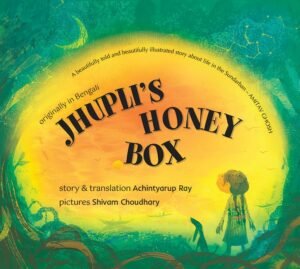
Sangeetha: At Tulika, we have always focused on telling stories that are rooted in India. They showcase different childhoods across different social milieus and cultural contexts. During rights sales, we are very particular about preserving this essence of the books and make this clear at the outset. We haven’t faced too much of this problem as publishers come to us seeing the value in the book they want to acquire. Some of these books have gone on to win awards in those countries, validating the belief that culturally specific books do resonate with readers everywhere.
 AABP: Which international markets have proved most receptive to your titles, and what — in your assessment — drives that reception?
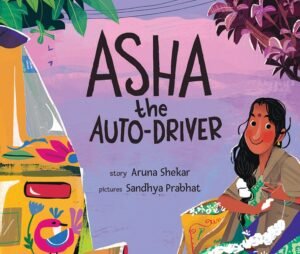
Sangeetha: Our titles have travelled to many countries but we’ve seen the most reception from North America, U.K., Japan and China. In North America and to a lesser extent in UK there has been a strong push for multicultural books. There is a strong market for them with library sales and promotions through awards. In Japan and China they must have been acquired as part of specific programmes. The illustrations and art styles in the books have been a strong attraction.
 AABP: Which languages do you publish? Does the international journey almost always run through an English edition first or regional languages also find their audience abroad?
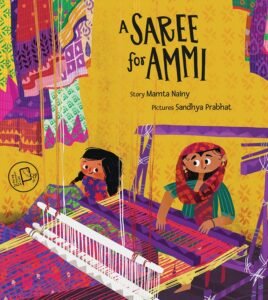
Sangeetha: Tulika publishes books in English and eight Indian languages – Hindi, Tamil, Malayalam, Telugu, Kannada, Marathi, Gujarati and Bengali. International rights sales typically go through the English edition of the book for ease of translating into the buyer’s respective language. Though digital distribution has changed that with growing demand for Indian language books in e-book or audio-visual formats.
AABP: How do you approach translation — into other Indian languages and into international ones?
Sangeetha: We haven’t translated any into foreign languages as that is done by the publishers. We translate into the Indian languages and we make all efforts to make sure nothing is lost in the translation. Sometimes we have to make small changes from the original so that the translations sound natural in the language.
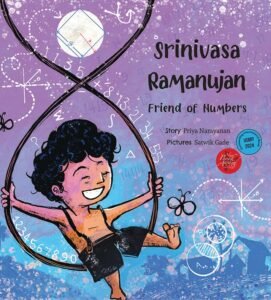 AABP: Are Indian children’s book illustrators gaining independent international visibility or does the journey still mostly run through the publishing house?
Sangeetha: Both are happening! We have connected foreign publishers with illustrators when they ask. These days illustrators are being approached directly by publishers from other countries. The internet and social media have increased visibility for a lot of illustrators.
AABP: How does world-class Indian printing factor into your ability to compete internationally?
Sangeetha: We haven’t really made any concessions for better production for foreign markets. We ensure highest standards in production for each and every book we publish keeping the price factor in mind. Our books are priced reasonably for the middle-class market we sell to.
 AABP: How important are international book fairs — Bologna, Frankfurt, London — to your global strategy?
Sangeetha: Book fairs are a great place to network, meet new partners and connect with existing ones. Apart from the meetings we fix there’s always the possibility of finding a new collaborator by chance as I discovered at the Bologna Book fair this year. Pre-pandemic Tulika was a regular participant at the Bologna Book fair and also at the London Book Fair. We have also been invited to the Paris, Frankfurt and Abu Dhabi book fairs. The pandemic slowed down things but the visibility we had built up helped. Today, publishers and digital partners reach out to us directly and rights sales are made virtually. Of course, it’s always lovely to meet someone in person but the dependency has reduced.
AABP: How much do awards move the needle for you commercially and culturally?
Sangeetha: Awards definitely help with increasing visibility and awareness of books. It creates curiosity and interest which does help in the sales and promotion.
 AABP: Is there sufficient government or institutional support in India for publishers seeking to go global? What more is needed?
Sangeetha: There hasn’t been too much. But the recent programme launched with the Chennai International Book Fair for rights trade as well as their translation grant has been promising.
AABP: What does the next chapter look like for your house globally?
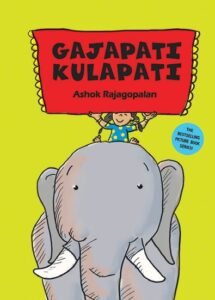
Sangeetha: We recently sold animation and merchandising rights for our bestselling picture-book series, Gajpati Kulapati. A first for an original Indian picture-book character. There’s increasing discussion around digital distribution of titles by way of e-books, audio and other formats. So, it’s definitely an exciting time from a new media perspective. We have also sold Dutch and Portuguese rights last year which is encouraging and shows a greater openness in more countries.
Sangeetha Menon a.k.a. The Moody Marshmallow is a writer, editor and podcaster based in Chennai. She currently handles the rights portfolio at Tulika Publishers, finding new avenues for stories to travel. Her writing has appeared in publications like The Madras Courier, The Alipore Post, Pink Lungi and Sustainability Next, to name a few. Her podcast The Closet Writer Chronicles is in the top 5% of globally shared podcasts.
Comments are closed.