
Beyond Books: How Libraries Are Becoming Community Powerhouses
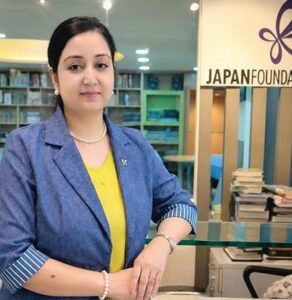
 “The Japan Foundation New Delhi was established in 1994 as an autonomous and cultural exchange agency of Government of Japan. We focus on promoting Japanese Arts & Culture, Japanese language and Japanese Studies in India. Also, through our library, we introduce Japanese books and Japanese atmosphere.”
-Teruyuki Hoshina
Director (Japanese Studies & Global Partnerships) The Japan Foundation, New Delhi
 For decades, public libraries in India have been viewed largely as repositories of books, quiet, functional spaces that have struggled with dwindling footfall, limited funding and ageing infrastructure. Yet, as conversations around literacy, lifelong learning and community development gather momentum, a new generation of libraries is beginning to challenge that perception. Smita Dwivedi brings more.
Public libraries in India are evolving from traditional book repositories into vibrant community hubs by focusing on user-centric design, curated collections, and experiential spaces. Initiatives like the Coforge Public Library and The Japan Foundation Library exemplify this shift by fostering reading cultures through accessible, modern environments.
Coforge:building spaces for lifelong learning
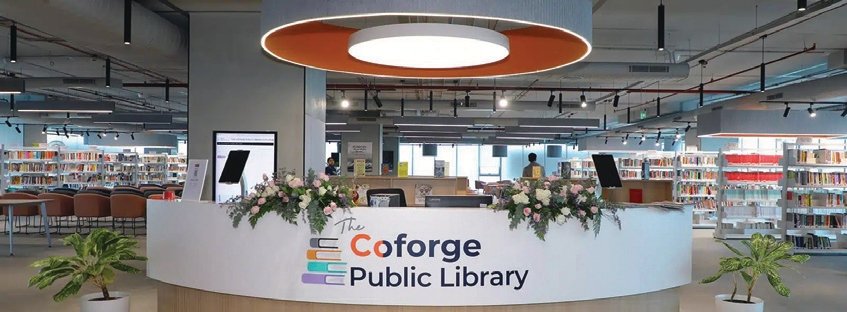
Among the most compelling examples is the Coforge Public Library, a CSR initiative spearheaded by Anuradha Sehgal, Chief Brand & Sustainability Officer, Coforge. The initiative is reimagining libraries as welcoming community spaces where reading becomes an experience, curiosity is nurtured, and learning extends far beyond textbooks.
A vision born from personal experience
 Anuradha shares that the idea for the Coforge Public Library originated with Coforge CEO Sudhir Singh, whose own life was shaped by access to quality libraries. Growing up as the son of an Army officer, he experienced the value of libraries early in life. Later, while studying at premier institutions such as the IITs and IIMs, and subsequently living in the United States, he witnessed how community libraries served as vibrant centres of learning and social interaction.
Inspired by that model, he envisioned creating similar spaces in India through the company’s CSR initiatives. Coforge had already identified education as one of its CSR focus areas. Now they honed in on one critical element of education that was underinvested —the habit of reading.
Beyond Books: building a reading culture
In Anuradha, Coforge found the perfect champion to bring this vision to life. An ardent reader herself, Anuradha, saw reading as a lifelong pathway to independent thinking, creativity, concentration and continuous learning and libraries not merely as places to borrow books, but spaces that could inspire children and people to read more.
 For Anuradha, the challenge is not merely making books available but inspiring people to pick them up. “A library offers two things, a thoughtfully curated collection of books and a safe, inspiring space in which people actually want to read. In densely populated urban India, where many families live in compact homes with limited quiet spaces, this second aspect becomes equally important,” she explained.
Curating for readers, not shelves
One of the most distinctive aspects of the Coforge Public Library is its reader-first approach to collection development.
Instead of building collections around traditional assumptions, the team constantly studies reader behaviour and adapts accordingly.
Initially, the libraries invested significantly in classics, as many libraries traditionally do. However, visitor behaviour revealed that contemporary readers—particularly children and young adults—were gravitating towards different kinds of books. The result was a major shift in curation.
Today, the Vasant Kunj library houses nearly 16,000 books, including approximately 4,500 children’s titles. The collection spans fiction, non-fiction, science, history, arts, comics, graphic novels, biographies, self-development, Indian literature, regional writing and contemporary publishing in both English and Hindi.
The objective is simple: every reader should find an entry point into reading, irrespective of age or interest. The team also works closely with publishers and booksellers, studying bestseller lists, award-winning titles and emerging publishing trends before expanding the collection. Importantly, the curation remains dynamic, evolving continuously through reader feedback and observation.
Designing libraries around readers
Although Anuradha comes from a marketing background rather than library science, she believes that this has proved to be an advantage. Her experience in understanding consumer behaviour has shaped nearly every aspect of the libraries’ design. The shelving, furniture, reading tables and spatial layout have all been carefully planned to enhance the reading experience.
Wide aisles comfortably accommodate wheelchair users. Reading tables provide adequate personal space between visitors. Children’s areas are colourful, interactive and designed specifically for young readers, with books displayed face-forward to encourage browsing.
Rethinking library organisation
 Perhaps one of the boldest decisions has been abandoning the traditional Dewey Decimal Classification as the primary browsing tool for readers.
Instead, Coforge organises its collections using the BISAC (Book Industry Standards and Communications) subject categories, a system commonly used by bookstores.
“The reasoning is straightforward.While Dewey Decimal Classification serves librarians efficiently, first-time visitors often find numerical codes intimidating. BISAC, organised around familiar subject categories, makes discovery significantly easier and more intuitive. The approach reflects the larger philosophy guiding the project: reduce barriers wherever possible,” Anuradha adds.
Learning along the way
She readily admits that neither she nor her team are trained librarians.Instead, they have relied on observation, conversations with publishers, booksellers, educators and readers, while continuously refining the model.That willingness to learn has drawn attention from established institutions as well.
“The Delhi Public Library network has approached the Coforge team to understand how its own libraries might be revitalised by adopting a more reader-centric approach. It is perhaps the strongest validation of a model built not around convention but around experience,” Anuradha shares with smile.
Libraries as community spaces
 The Coforge Public Library initiative reminds us that successful libraries are not defined by the number of books they house but by the communities they create.
Comfortable interiors, thoughtful design, carefully curated collections, children’s engagement programmes and inclusive infrastructure together transform libraries into welcoming public spaces where people genuinely want to spend time.
In an era dominated by short-form digital content and shrinking attention spans, initiatives like these reaffirm the enduring relevance of books—not merely as sources of information but as instruments of imagination, empathy and lifelong learning.
As Anuradha aptly summed up during the conversation, the objective is simple yet ambitious: to create libraries where children would rather spend an afternoon reading than at a shopping mall.If more public libraries embrace that philosophy, India’s reading culture could well be entering a new and inspiring chapter.
“Technology and employment landscapes will change. What will remain unchangedand relevant always is the ability to learn, think deeply, imagine, and stay curious. Reading builds all of these,” Anuradha concludes.
The Japan Foundation Library: a cultural gateway to Japan through books
Libraries today are no longer just spaces to borrow books—they are centres of learning, cultural exchange and community engagement. Among the institutions redefining this role is The Japan Foundation Library in New Delhi. Established in 1994 as part of The Japan Foundation, an autonomous cultural exchange agency of the Government of Japan, the library has been promoting Japanese arts and culture, Japanese language and Japanese studies in India for over three decades. More importantly, it has created a welcoming space where readers can experience Japan beyond textbooks and travel brochures.
As Librarian Sangam Kumari explains,”The Japan Foundation Library houses one of India’s most comprehensive collections on Japan, offering a wide range of resources for students, researchers, Japanese language learners, educators, and anyone interested in Japanese culture.”
A collection that reflects the many facets of Japan
The strength of the library lies in its carefully curated collection. Visitors can explore Japanese literature in Japanese, English, Hindi and several other Indian languages, alongside an impressive collection of manga, children’s books, Japanese language learning material and specialised resources on Japanese art, architecture, history, sociology, cinema and cultural studies. The library also subscribes to a variety of magazines to ensure readers remain connected with contemporary Japan.
According to Sangam, “Our collection is designed to serve students, academic researchers, language learners, educators, arts and crafts lovers, manga readers and anime fans. We regularly add new publications and award-winning titles while maintaining a balanced collection that reflects both traditional and contemporary Japan.”
This dynamic approach ensures that the library remains relevant to both serious researchers and casual readers.
From Murakami to Manga
Japanese fiction continues to be one of the library’s biggest attractions. Works by internationally acclaimed authors such as Haruki Murakami, Sayaka Murata, KeigoHigashino, Banana Yoshimoto and Hiromi Kawakami are among the most frequently borrowed books.
Equally popular is the library’s extensive manga collection. Titles including Naruto, One Piece, Demon Slayer, Jujutsu Kaisen and Berserk, along with the works of CLAMP, have made the library a favourite destination for younger readers.
However, reading interests extend far beyond fiction. Visitors also explore books on Japanese language, travel, architecture, business studies, anime culture and both traditional and contemporary Japanese customs, reflecting the growing curiosity about Japan in India.
Manga Is just the beginning
One of the most interesting trends observed by the library is how young readers’ interests evolve over time.”Many visitors initially come because of anime or manga,”says Kumari,”but later explore Japanese literature, history, philosophy and language learning.”
This curiosity often grows into an interest in Japanese architecture, minimalist design, cooking, travel, philosophy and study-abroad opportunities. What begins as entertainment gradually becomes a deeper engagement with Japanese society and culture.
Bringing culture alive through events
The Japan Foundation Library believes that reading should not remain confined to bookshelves. Throughout the year, it organises book discussions, author interactions, storytelling sessions, reading clubs and cultural exhibitions that encourage visitors to participate actively.
Themed book months are among the library’s most popular initiatives. Visitors can participate in haiku writing, origami workshops, traditional Japanese games, architecture workshops, travel showcases and specially designed programmes for children.
“These events make learning an adventure rooted in creativity and cultural connection,” Kumari notes.
Resources beyond literature
While literature remains at the heart of the library, its specialised collections make it a valuable resource for a much wider audience.
Readers have access to books on Japanese art, architecture, theatre, painting, cooking, traditional heritage and language education. The library’s children’s collection and comprehensive manga archive are among the finest in India, while many of its specialised resources are difficult to find elsewhere in the country.
For students, researchers and translators, the library offers textbooks, audio resources, JLPT and JFT study guides, electronic dictionaries and specialised reference works. Those planning to study or work in Japan can also access practical guides on universities, scholarships and professional life.
“Our staff provides personalised assistance, helping visitors navigate the collection and discover resources perfectly aligned with their academic, research or professional goals,” Kumari says.
Open to everyone
The Japan Foundation Library welcomes anyone interested in Japan. Residents of Delhi and the NCR can become members after completing an online application, verifying their documents and paying the annual membership fee. Members can borrow books, use library resources and participate in the Foundation’s cultural activities throughout the year. For first-time visitors, Kumari has a simple message:”Whether you love getting lost in a good book, reading manga, mastering the Japanese language, planning your dream trip, diving into history and art, or just want a peaceful spot to read, there is a special corner here waiting just for you.”
She encourages newcomers to browse freely, seek recommendations from the library team and participate in upcoming events because, as she puts it, “You may be surprised to find yourself discovering new interests you never expected.”
Building cultural bridges
The Japan Foundation Library demonstrates how a specialised public library can become much more than a repository of books. Through its carefully curated collection, reader-focused services and vibrant cultural programming, it has become a space where literature opens doors to language, history, art and human connections.
At a time when libraries worldwide are redefining their role, The Japan Foundation Library stands as a model of how books can foster curiosity, promote cross-cultural understanding and strengthen the ties between two nations—one reader at a time.
Comments are closed.