
How India’s Authors Are Rewriting the Publishing Playbook
A decade ago, most Indian authors turned to self-publishing after a traditional publisher said no. Today, many choose it first, drawn by creative control, direct access to readers and the chance to build a personal brand around their ideas. In this conversation with AABP, Naveen Valsakumar, Co-founder and CEO of Notion Press, traces that shift.
— Naveen Valsakumar, Co-founder and CEO, Notion Press
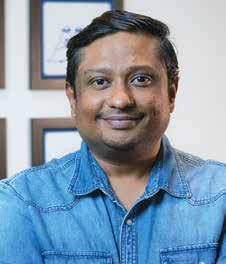 Self-publishing has moved from being a publisher’s rejection slip to an author’s first choice, a way to control the book, build a brand and own the intellectual property around it. Naveen Valsakumar, Co-founder and CEO of Notion Press discusses the issue of discoverability, the role of AI in removing friction around authorship, and his vision of an ecosystem in which the best ideas find their readers. Excerpts.
AABP: How large is the self-publishing market in India today, and how significantly has it grown over the last five years?
Naveen: The interesting thing is that nobody really has a clean number for the size of self-publishing yet. Most reports still club it with the larger publishing market, but from where we sit, the growth is impossible to miss.
When we started Notion Press in 2012, self-publishing was largely seen as the next step after a traditional publisher said no. Today, authors come to us because they actively want to publish independently. That is a very different market.
The larger publishing market is rapidly growing with a projected CAGR of 19.4% in Nielsen’s IBMR 2022, and independent publishing has benefitted from three big shifts alongside this growth.
The first was print-on-demand, which reduced publishing costs dramatically. Authors don’t have to invest in printing 1000 copies before finding out whether anyone wants the book. This, along with increased internet penetration, has led to the second shift: improved accessibility. Today, authors can publish their book professionally and make it available to readers across Indian and international markets without needing to deal with distributors and bookstores.
But the biggest shift has been the author themselves. They no longer feel they need permission to become authors. Writers today are more tech- and social media-savvy and understand their audience more than they did 10 years ago. The rise of the creator economy has also shaped how writers see their work as a part of their personal brand.
AABP: Notion Press has grown into one of India’s leading self-publishing platforms. What were the key milestones and decisions that shaped the company’s journey?
Naveen: In the last 14 years, there’s only been one underlying decision that has shaped our journey: solving publishing bottlenecks.
When we started in 2012, what we wanted to solve was access. A key part of doing that was making sure authors didn’t have to print 1000 copies before knowing there was an audience for their book. That’s how our shift towards print-on-demand came to be.
Distribution was another bottleneck for independent authors. So we started building partnerships that could take independently published books beyond our own platform and make them available through major online retailers in India and eventually across international markets. Today, books published through Notion Press can be distributed across more than 150 countries.
Over time, another bottleneck appeared: Some authors wanted support beyond publishing their manuscript and instead wanted to understand what the market wanted before developing books around those opportunities. That pushed us to think of books as products that appeal to readers, using market insights to inform what gets created. That shift steered us from being a publishing services company into a publishing platform, where authors could choose between self-directed or professionally guided publishing modes.
Another important area of expansion has been Indian-language publishing. We now have more than 5,000 Tamil titles alone, along with books across several other Indian languages. In 2026, we’re still on the mission of solving publishing bottlenecks.


AABP: What has changed most about the Indian author over the past decade? Are more writers now choosing self-publishing as their first choice rather than approaching traditional publishers?
Naveen: The biggest shift is how authors look at their work. Authors have started thinking about their books like an entrepreneur. They think about who their reader is, how they are going to reach them, what the book can do for their career or their business, and how they want to control the intellectual property around it.
The creator economy has accelerated this shift. We have individuals building a brand and audience for themselves across YouTube, Instagram, newsletters, etc., and leveraging their reach to launch their careers. This shows a budding author that they don’t need to wait for somebody else to decide if their ideas deserve an audience.
This is in direct contrast to how authors used to think a decade back. 10 years ago, authors came to us either after getting rejected by a traditional publisher or to offer publishers a “proof of concept” in a bid to be picked. Today, they look at publishing models through the lens of ‘which suits my needs best?’ The ones wanting more creative control end up choosing self-publishing, either as a first choice or a transition from traditional deals later in the career.
AABP: Amish Tripathi, Ashwin Sanghi and several other successful Indian authors have demonstrated that self-publishing can be a launchpad to mainstream success. What common traits do you see in authors who make that transition successfully?
Naveen: If you look at any author who made the transition from self-publishing to mainstream success, you’ll find an entrepreneur building a business. These authors went beyond just publishing their books and aggressively marketed them through social media, book trailers, and more.
Take Amish Tripathi, for example. He and his agent distributed the first chapter to bookstores for free before launch, leaned heavily into the positioning of the book by focusing on everything from the cover to the marketing copy, and created a live-action book trailer for YouTube. The sample chapter created enough buzz to have bookstores ordering more copies ahead of the launch, and The Immortals of Meluha entered the bestseller list in the first week.
Ashwin Sanghi did something similar. He published The Rozabal Line through a print-on-demand platform. He then marketed it through YouTube, social media, and websites and sold hundreds of copies before being picked up by Westland.
What I find interesting about both of these stories is that neither compromised their books to chase the market. Writing and the business of publishing were kept separate, treating marketing very seriously. And that’s the common trait in successful independent authors. They are willing to invest in the book, experiment with ways of reaching readers, learn what works, and keep building momentum rather than assuming that publishing is the end of the process.
AABP: Do highlight more successful authors working with Notion Press.
Naveen: We’ve had authors take very different paths to success, which I think reflects how much the possibilities for independent authors have expanded.
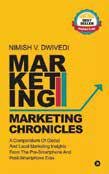
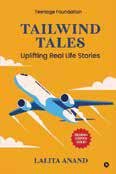
We’ve had authors who’ve seen commercial success like Lalita Anand and Nimish V. Dwivedi, whose Tailwind Tales and Marketing Chronicles, respectively, sold over 12000 copies. We’ve also seen some of our commercially successful books, like The Gita for Gen Z by Rania Sen and Can We be Strangers Again? by Shrijeet Shandilya, opening the doors to traditional publishing.
Anand Suspi’s Half Pants Full Pants is another interesting example of where a book can ultimately go. The book was adapted into an eight-episode series for Amazon Prime Video.
AABP: Can self-publishing now be seen not merely as an alternative to traditional publishing, but as an “audition platform” for authors?
Naveen: I wouldn’t call self-publishing an “audition” because that still assumes that getting picked up by a traditional publisher is the end goal. I don’t think that’s the case anymore.
Yes, a lot of successful independently published books do attract traditional publishers and make that transition. We’ve seen that internationally and in India, within our ecosystem.
But there’s another possibility that has many authors actively choose self-publishing. An author may build on the success of publishing independently to create personal brands. You have Notion Press authors like Sangeetha Sumesh, who used her What The Finance as a platform to build her consulting business.
That’s the shift self-publishing has brought to the picture. It gives authors options. You can remain independent, move to a traditional publisher, sell individual rights, or build products around the book.
AABP: What is driving authors towards self-publishing—creative control, speed to market, better economics, or access to a wider audience? Which of these factors matters most today?
Naveen: If I had to pick one, I would say control. We’re increasingly moving towards a personal brand-led economy, where creators have a say in how their work reaches the audience.
Self-publishing allows them to control when they publish, how they price the book, how they position it, how they market it, what changes they make later, and what happens to the rights. Speed and economics flow from that control.
This, of course, means higher responsibilities on an author’s shoulders. They have to think about product, positioning, and marketing. The upside is that they get to own more of what they’re building.
AABP: How is Notion Press helping authors build visibility, reach readers and generate sustained book sales?
Naveen: We approach this at two levels.
The first is helping authors market themselves and their books. Our marketing services include book-focused campaigns, but we also work with authors to improve their social media presence with a customised strategy for each book and author.
The second level is distribution and discovery. That’s a harder industry problem, and one we’re still working on.
One of the ways we’ve been trying to solve the distribution problem is through our moving bookstore. The idea is to explore better ways for books to reach readers. I don’t think we’ve solved discoverability yet, but it is increasingly one of the problems we’re focused on solving.
AABP: How has technology, including AI and digital publishing tools, transformed the self-publishing process? What opportunities and challenges does this create for authors?
Naveen: Technology is the reason self-publishing can operate at the scale it does today.
Print-on-demand changed the economics of inventory, e-commerce changed distribution, digital publishing tools made professional production accessible to far more people, and dashboards gave authors access to sales information that previously sat somewhere inside a publishing company.
AI is the next layer of that change, but I think we’re currently asking the wrong question about it. Everybody asks, “Can AI write a book?” The more interesting question is: what are all the things surrounding authorship that technology can make dramatically easier?
We know it can make book research easier, despite the possibility of factual errors. AI can also make professional publishing tools accessible to someone without technical expertise. Tools like AI4Bharat have shown us that AI can help us cross language barriers. The next question is: can one piece of intellectual property be adapted intelligently into other formats using AI?
Those are real opportunities for authors in 2026. There are obvious risks as well, like with any technological advancement in the past. We have active discourse around copyrights, training data, disclosure, and where assistance ends and authorship begins. But those risks don’t mean that AI diminishes the value of authors. It just means that technology should be used to remove friction around an author instead of removing the author.
AABP: How do the economics of self-publishing compare with traditional publishing for an author? Has the earning potential of successful self-published authors changed perceptions of the model in India?
Naveen: Yes, it has. But what’s a more interesting factor at play is the intellectual property. The true value of a book in 2026 is not the Rs 399 somebody pays for a paperback and what an author earns from it. It lies in the speaking engagements, courses, adaptations, translation rights, or the audience that the book opens up for an author.
That changes things. Because authors have started thinking beyond royalties and considering which model gives them the space to build around their IP.
AABP: Looking ahead, where do you see India’s self-publishing market in the next five years, and what role does Notion Press aspire to play in its evolution?
Naveen: The self-publishing industry started with the problem of access. I think we’ve largely solved that problem. Authors have plenty of options to publish their books today.
Our next focus needs to be on building an ecosystem around independent authors. Publishing, distribution, and discovery are parts of it. Technology, data, retail, communities, and helping authors monetise their intellectual property are all going to become increasingly important.
When we started Notion Press, our question was: How do we give every writer the opportunity to publish? The question for the next decade is bigger: How do we make sure the best ideas actually find their readers? That’s the problem I want Notion Press to solve.
About the Interviewee
Naveen Valsakumar is the Co-founder and CEO of Notion Press. He has spent the last fourteen years building technology, publishing, and distribution solutions designed to make professional publishing accessible to independent authors.