
Are Mobile Phones and Social Media Impacting Literature?
Technology has completely transformed the pace of our lives and mobile phones are no longer merely a means of conversation; they have become books, cameras, newspapers, televisions, banks, marketplaces, and sources of entertainment. Social media has made communication even faster. In such a time, one question repeatedly arises: Is literature dying? Piyush Kumar, Director, Prabhat Prakashan Pvt Ltd shares more.
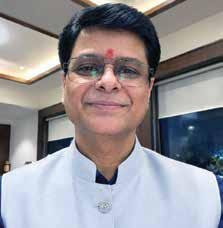
— Piyush Kumar, Director, Prabhat Prakashan Pvt Ltd
 At first glance, it may seem that the importance of literature is declining. Instead of books, people are seen holding mobile phones. Short videos, reels, memes, and posts of just a few lines are becoming more popular than long stories and novels. The younger generation often finds it difficult to focus on a single subject for an extended period. However, when we examine this question more deeply, it becomes clear that literature is not dying; rather, it is changing its form, medium, and modes of expression.
Changes in Reading Habits
In the past, the primary forms of literature were printed books, magazines, and newspapers. People visited libraries, bought novels, carefully preserved poetry books, and eagerly waited for periodicals and magazines. Today, those same readers read e-books on their mobile phones, follow blogs, browse online magazines, or listen to audiobooks. From this perspective, technology has not restricted literature; instead, it has provided opportunities for literature to reach new readers.
Social Media and Declining Concentration
 The greatest challenge is a lack of concentration. The entire structure of social media is based on rapidly changing content. It takes only a few seconds to move from one post to another, from one video to the next, and from one piece of information to another.
In contrast, literature requires patience. When our minds become accustomed to consuming short, fast-paced content continuously, reading longer works begins to feel difficult. This is why many people today own books but lack the time or patience to read them.
Is Short-Form Content an Alternative to Literature?
Today, two-line verses, brief reflections, inspirational quotes, and short stories are highly popular on social media. They are often described as literature as well. But, literature is not merely a collection of beautiful words. It expresses human experiences, the complexities of society, emotions, struggles, and ideas with depth.
The works of Premchand, Mahadevi Varma, Phanishwar Nath Renu, Nirala, Dinkar, Manto, Tagore, and Shakespeare remain alive because they look beneath the surface of their times and societies to understand human beings. Literature does not merely entertain readers; it can also transform their thoughts and sensibilities.
Social Media Creates Opportunities for New Writers
Social media has reduced the distance between writers and readers. Today, a poet can post a poem and receive immediate feedback from readers. New writers can gain recognition even without the support of a major platform. Many writers began their journeys on digital platforms and later had their books published.
Similarly, book reviews, literary discussions, online book clubs, and conversations with authors are becoming popular on social media. In the past, literary discussions were limited to certain groups and magazines, but now ordinary readers can also express their opinions about a book. This has democratized literature.
The Impact of Social Media on Language
Social media has made language much simpler, shorter, and more hybrid. The use of English words in Hindi has increased, and writing Hindi in the Roman script has also become common. Some people consider this a decline in language, but languages have always evolved with time.
If the language of social media becomes limited to brevity, incorrect spelling, and superficial expression, literary language may be adversely affected. On the other hand, social media has also provided a new platform for Hindi and other Indian languages. Poetry, stories, folk tales, and songs in regional languages now reach more people than ever before.
Why Will Literature Always Remain Necessary?
Literature gives us an opportunity to enter the lives of others. It enables us to understand the emotions of people we have never met. Literature deepens our empathy and inspires us to reflect on society, history, love, death, struggle, justice, and human relationships. No matter how advanced technology becomes, stories and poetry will remain essential as long as human beings have emotions.
The Threat Is Not the Death of Literature, but the Decline of Serious Readers
Serious reading trains our minds in concentration, analysis, and imagination. Therefore, publishing books alone is not enough to preserve literature; a culture of reading must also be cultivated.
In schools, children should not be taught literature solely for examinations. Instead, they should be encouraged to develop the habit of reading for pleasure. Homes should provide an environment that values books. Libraries should be modernized, and digital media should be used to draw people towards literature.
Balancing Literature and the Digital World
Writers must understand new forms of media. Short excerpts from novels, poetry videos, conversations with authors, and online readings can be used to attract new readers to literature. Digital media can serve as a gateway, with deeper literature becoming the next stage of the journey.
Today, the need is not to preserve literature in its old form, but to present it through new media while preserving its essence.