
12 Years Inside Indian Self-Publishing!
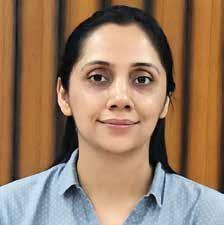
How quality publishing services, transparent, personalized communication, print-on-demand model, higher author profits and focused marketing efforts changed the self-publishing landscape, as seen by Navsangeet Kaur, Founder and Director, White Falcon Publishing.
— Navsangeet Kaur, Founder and Director, White Falcon Publishing
 India is the world’s third-largest publishing market, after the United States and China. There are about 26,000 publishers in India. About 80,000 books are published yearly by traditional publishers. Books published via the self-publishing route exceed this number any given day. Therefore, self-publishing market now holds a respectable position in the Indian publishing landscape.
The Backstory
White Falcon Publishing was established in the year 2014. At that time, self-publishing in India was in a very nascent stage. Nobody understood well what this new, disruptive phenomenon could lead to. We plunged into it as we had seen success in self-publishing a book via KDP in the US. The book we published was designed, edited, and formatted by us. The visibility it achieved on its own, as the market wanted to devour that topic, was unimaginable. The profits that followed were a sweet surprise. The transparency in sales reporting and timely payments built our trust in the model.
With a successful trial at hand, we felt Indian authors too could gain from such a model. As only 1% of the total submissions to traditional publishers land publishing contracts, 99% cannot be refuted as unfit for publishing. Out of the 99% rejected manuscripts, more than 50% have the ability to find the right audience. Empowering such writers was the need of the hour. And that is what became our aim for the next 12 years that have followed:
-
To limit gatekeeping
-
To reduce time to market
-
To increase transparency and offer personalized attention
-
To maintain equivalent quality of printing as per traditionally published books
-
To offer maximum author profits
Aim for Change
With self-publishing, writers stopped waiting for permission. Students, working professionals, retired army officers, eight-year-old storytellers, poets, grandmoms, granddads, anyone could dream of becoming an author. They had written their thoughts, visions, imaginations in secret diaries over the years but did not have the means to make their writings transform into a book and be available to audience worldwide. White Falcon made that dream a reality.
What change we brought to the fore –
1. Quality is of paramount importance to us. We, at White Falcon, review the manuscript and might request for changes. Quality over quantity has been our motto. Rather than opting for exponential, superfast, DIY facilities, we have consciously maintained our position as a quality-loving self-publisher. We might do a bit fewer books but would not compromise on editing, cover design, paper quality, etc. This has led us to produce several bestsellers. Books that would not have been accepted traditionally were published by us and achieved immense success. Books published 10 years ago keep selling till date. That is the power of the words- they are rarely outdated or backlisted or out of print. When a book finds the right audience, it succeeds. No gimmicks, just value, worth and ease of access.
2. With more and more writers adopting the self-publishing route, eCommerce followed. Amazon, Flipkart and our own store put a title in India and in more than 150 countries before a national distributor had to say yes. Earlier, availability used to mean a few bookstores in a few cities. A reader in Canada or UAE can now order the same book a reader in Chandigarh ordered that morning. Bookstores offer the experience, but ecommerce offers both convenience and a huge database of books with rarely a book not available, if you need one. Growth of ecommerce has significantly helped self-publishing prosper. We have seen monthly order volumes increase by 50% over the last three years.
3. With efficient, transparent workflows in place, time collapsed. At White Falcon, a book can reach the market in four to six weeks. And this is not at the cost of quality. Quality checks at key stages are in place as we want an author to feel proud when holding their book. So, prioritizing customers, their deadlines, their aspirations have become a part of how we operate.
4. With every channel operating transparently, authors are able to get a sneak-peek into how their book is faring across geographies. Timely sales reporting and payments have helped authors earn multifold their initial investment in publishing. More than 2 crore rupees as author profits has been paid to authors. Out of print books got revived. Regional language books reached wider audience.
The Genres That Stand Out
We publish books across most genres. Textbooks, novels, short stories, poetry, journals, children’s picture books, coffee table books, cookery, architecture, art, history, self-help, religion etc.
Business and professional writing is the first. India GST for Beginners went live as the law took effect and outran our small batches until we printed a few thousand copies. The ABC of Real Estate in India by Sachin Mittal, in 2018, stayed an Amazon bestseller because Indian readers had almost nowhere else to go for Indian rules and on-ground problems. A practising chartered accountant, a founder, a property consultant became bestselling authors overnight.
Academic work is the second. Theses, dissertations, research papers, conference proceedings, technical manuals.
Religious and spiritual books are the third. A first-time author, a retired army officer, wrote on Sri Guru Granth Sahib. That book has been a consistent bestseller in the Sikhism category in India and abroad for years. We revived a public-domain book on Guru Nanak Dev Ji and found a new generation of readers. Faith publishing is a main current in this country. Self-publishing lets a practitioner write from inside a tradition, in the language of that tradition, while a general-interest imprint is still making room.
Self-help is the fourth, in the broad sense. Livelihood, confidence, parenting, health, the working life. Readers want a useful book they can finish. Authors in this category often already have a practice, a clinic, a classroom or a following. The book is an extension of work they already do.
Astrology is the fifth, and it still surprises people who think of self-publishing as only fiction. An astrology title on Nakshatra Padas sold out within hours of release. That velocity caught us off guard. Indian readers of jyotish want depth and method, something other than a reprinted Western sun-sign column. When that book is well made, it sells.
Fiction still has a place. Almost Dark, four horror stories, sold because readers will take short, sharp work when a 400-page debut would have been lost.
Children’s books became a personal campaign after I looked, when my son turned one, for picture books set in an Indian house or street, and found very few.
Most of our bestsellers, though, come from those five. Business, academic, religious and spiritual, self-help, astrology. Niche non-fiction written for the actual Indian reader is the strongest pattern I have seen in twelve years. Regional language books click most with the Indian diaspora making oversees as the stronger market for sale than India.
Authors’ Gain
Self-publishing cost has three stages:
-
Pre-publishing is editing and design.
-
Publishing is ISBN, copyright formalities and printing. Cost changes with colour or black-and-white, paper, trim size, page count, hardcover or paperback.
-
Post-publication is distribution and marketing. Author spend varies with the job. A slim volume of poetry and a 400-page colour academic monograph are different books, so are their publishing costs. Our guided plans run from Bronze through Titanium. Return depends on the book, the price, and whether the author will talk about it after it is out
What the author keeps matters more than the sticker.
Copyright stays with the author. The author sets the list price, above cost. After production and channel costs, the remaining profit goes to the author in full. For a niche book with a clear readership, self-publishing often wins on honesty as much as on rate. On titles that warrant it, we put more of our own effort behind Amazon ads, book fairs, author meets and, for a few, a festival placement or a proper launch. That spend is a judgement. It is reserved for titles that can use it.
Success Metrics
We work with a limited number of authors and titles, and we prefer it that way. Quality over quantity is a working rule, something we use on the list, not a poster. Formats run from pocket size to 8.5 × 11, paperback and hardcover, black-and-white or colour.
The surprises still sit with me. Punjabi folk songs my grandmother could still recall, a US bestseller for years. Virsa, also in Punjabi, finding readers in another time zone. Market Aani Me, Bhagyashree Phatak’s Marathi book on stock markets, listed only on our store, earning the author many times her initial investment and continuing to sell. We have published work connected with Raja Ravi Varma, the artist Trilok Singh, Godrej, G.V. Prasad, and actor Inderpal Singh.
When the Library of Congress asks for titles, when a book is shortlisted at a lit fest, when an author returns for a fourteenth or a twentieth book, that is the metric I trust. Praise for the book in the hand matters more to me than a count of how many authors we processed in a year. Jaipur Literature Festival recognition for our books, Chandigarh Sahitya Akademi awards for our titles, the BREW Readers Choice Award 2024-25, Publisher of the Year, Silicon India’s Company of the Year 2020 in publishing, a 4.8 Google rating. Those are records that speak about our work.
Regional Languages Rising and Shining
“Write regional, go global” is now easily achievable.
Our Punjabi titles have not seen as much success in India as with the global Punjabi diaspora.
Currently, most regional language publishing is still limited to local publishers who are unable to make the books reach a global audience in multiple formats. The distribution gap needs to be bridged to facilitate wider readership of regional titles.
What We Built, and Why
We wanted a publishing house that kept composition, editing, inventory, reprints and the sales listing in its own hands. So we built the pieces. Cover, page layout, proofs, author copies, sales and royalty are accessible on a project-management system we built for this workflow, and on mobile apps, because authors work from phones.
We timestamp books on public networks such as Ethereum and Gnosis. Authorship and publication date exist on the blockchain network. We were the first publisher to offer this as a certificate, and remain, to our knowledge, the only one in India. Book NFTs take the same instinct further. Limited-edition ebooks as numbered ERC-721 tokens, with authors receiving 80 percent of the primary mint and of secondary royalties.
SparkTales is a children’s-book studio for kids, tweens and teens, using AI for illustration and layout. A story idea becomes an illustrated book with themes, reading levels and templates.
ScholarGram was our open academic platform. Theses, dissertations, papers and journals went into print and ebook, with the publishing fee waived. BooksFundr was India’s first crowdfunding platform for books. Pre-order campaigns, and titles that hit their goal, were published by us with the publishing charge waived. Both have been retired for new submissions. They were real experiments in making publishing cheaper and more public.
What Twelve Years Have Taught Me
Self-publishing in India is now a professional route. I call it empowerment with better copyright terms, higher author profit, faster time to market, global online availability, and a book that stays in print while it has readers. With more and more writers understanding that power lies in their hands, self-publishing market is going to flourish in times to come. We are currently seeing a YoY increase of 40%
What I will still be watching, as I have since 2014, is simpler than a market report. Whether the author who trusted us with a manuscript can open an app, see a sale, hold a well-printed copy, and feel proud about it. That is the trust I have spent twelve years building. That is still the work.
About the Author
Navsangeet Kaur is a successful entrepreneur, a writer, a narrator and a doting mother. She is a university gold medalist in her graduation and post graduation from Punjab University, Chandigarh and an MBA from Symbiosis International University, Pune. Her love for books led her to take the entrepreneurial plunge to start White Falcon Publishing in 2014.