
Narender Kumar Verma: Publisher, Mentor And Builder Of India’s Reading Culture
Narender Kumar Verma (3 November 1948–10 July 2026) was a pioneering Indian publisher whose career reflected the resilience of a post-Partition family, the rise of Hindi mass-market publishing and the emergence of a distinctly Indian comics culture.
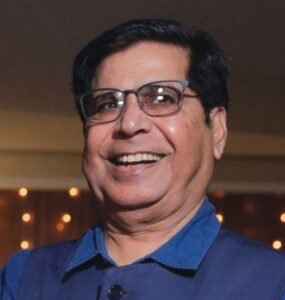 Narender Kumar Verma was born in Delhi on 3 November 1948 into a family whose association with books went back to pre-Partition Multan. After graduating from Shri Ram College of Commerce, University of Delhi, in 1968, N.K. Verma joined the family business. He contributed to the development of Hindi Book Centre, an important destination for Hindi publications from across India, and participated in efforts to take Hindi and other Indian-language books to readers, universities and libraries abroad. The family also developed an overseas presence through a bookshop in London, reflecting an unusually early belief in the international potential of Indian-language publishing.
Following a separation in the family business during 1978–79, N.K. Verma worked alongside his younger brother Gulshan Rai in establishing and expanding Diamond Pocket Books and Diamond Comics. The period demanded a fresh start at a time of emotional and financial strain, but it also allowed the brothers to pursue a new vision: affordable popular books and comics that could reach readers far beyond conventional metropolitan bookstores.
One of the most consequential professional associations of his life was with the legendary cartoonist Pran Kumar Sharma. Pran had created Chacha Chaudhary for Lotpot in 1969. In 1981, Diamond approached him with a plan to publish his characters in dedicated comic-book form and to extend them beyond Hindi into English and major Indian languages. The relationship brought together two complementary strengths: Pran’s creative imagination and Diamond’s publishing, marketing and distribution capabilities.
Through this association, characters such as Chacha Chaudhary, Sabu, Billoo, Pinki, Raman, Shrimatiji and Channi Chachi reached an extraordinary national audience. Pran remained their creator; N.K. Verma and Diamond helped transform them into scalable, multilingual and widely distributed comic-book properties. Chacha Chaudhary’s reliance on intelligence, common sense and experience—rather than physical power alone—offered Indian children a hero rooted in familiar social values and everyday life.
Diamond’s success was built not only on content but on access. Its publications travelled through railway-station stalls, bus-stand bookshops, city distributors, neighbourhood retailers, book fairs and postal membership programmes. N.K. Verma believed that readers should not have to search for books; books had to travel to the reader. This distribution philosophy helped make Diamond titles visible in metropolitan centres as well as smaller towns and transport hubs.
Diamond invested in television and radio promotion, magazine advertisements, wall publicity, book-fair competitions, sampling and gifts for children. Profits were deliberately reinvested into building public awareness. The result was not merely a series of successful publications, but a recognisable national brand associated with childhood, travel, humour and family reading.
Beyond comics, N.K. Verma helped develop a diverse publishing programme encompassing popular fiction, non-fiction, humour, self-development, health, spirituality and religious literature. Diamond published works by or editions associated with writers and thinkers including Gulshan Nanda, Ashok Chakradhar, Kaka Hathrasi, Joginder Singh, Abhimanyu Anat, Dr. Bhojraj Dwivedi, Maa Prem Usha and Osho, as well as translations and new editions of major literary authors.
N.K. Verma was also active within the wider publishing community and supported efforts to strengthen Indian-language publishing, bookselling and book fairs. As a writer, he contributed articles to Grehlakshmi and Sadhna Path. His books included Adhikar Se Pahle Kartavya and his autobiographical work Mera Jeevan Kora Kagaz, published in 2024.
Narender Kumar Verma passed away on 10 July 2026. His legacy extends beyond the companies and publications he helped build. It lives in the writers and artists who found a platform, the booksellers and distributors who became long-standing partners, and the readers who encountered books and comics as part of everyday Indian life.
For millions, Diamond Comics became inseparable from train journeys, summer holidays, neighbourhood libraries and the pleasure of reading outside the classroom. That emotional connection is perhaps the clearest measure of his contribution: he helped transform books and comics from products into habits, memories and shared family culture.
Comments are closed.