
Karadi Tales Turns 30: Rooted In India, Reaching The World
As Karadi Tales marks its 30th anniversary, Shobha Vishwanath reflects on the publishing house’s journey, its commitment to culturally authentic storytelling, the growing global visibility of Indian creators, and what lies ahead for Indian children’s publishing, in conversation with Varsha Verma.
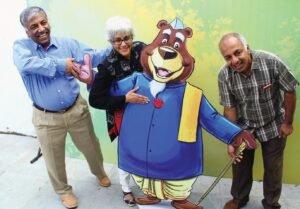 Karadi Tales is celebrating its 30th anniversary as an independent publishing house committed to creating culturally rooted children’s literature from India for readers across the world — allowing local stories to travel without losing their voice. “This journey has been shaped by the many people who have walked alongside us over the last 30 years — some from the very beginning and many others along the way. Along with my co-founders, Viswanath and Narayan, our colleagues, writers, illustrators, performers, editors, educators, designers, storytellers, and readers have all helped build Karadi Tales into a deeply loved children’s publishing house in India,” shares Shobha Vishwanath of Karadi Tales.
Here, Shobha shares more about the publishing house. Excerpts.
AABP: How would you describe the founding vision of your publishing house, and has that vision shifted as your books began finding readers beyond India?
Shobha: The founding vision of Karadi Tales has always been to contextualize children’s literature for children in India. The idea is to move beyond dominant colonial and Western narratives and foreground stories rooted in the social and cultural realities of India. To make these stories widely accessible, we publish our books in English, followed by local and global translations.
Karadi Tales was also shaped by India’s strong oral storytelling traditions, which is why sound, performance, and read-aloud experiences have always informed the way we think about children’s books and audiobooks. Throughout these years, our vision has remained the same.
AABP: What aesthetic, cultural, or pedagogical values are non-negotiable in the books you publish — and how do you protect these when working with international co-publishers or distributors?
 Shobha: One of the stricter editorial choices we make is to privilege hand-made and tactile illustration styles over heavily digital artwork. We believe the visual language of a book should emerge organically from the world of the story.
Similarly, the stories themselves must reflect the places they come from. In our manuscript selection, we are naturally drawn towards stories and artwork that are deeply rooted in Indian contexts and experiences.
As for pedagogical values, Karadi books never prioritize teaching or moralizing. We are drawn instead to stories that are whimsical, humorous, and emotionally honest, where learning remains incidental or subtextual rather than instructive.
Of course, Karadi Path, the ed-tech arm of the company, focuses more directly on pedagogy and language-learning practices, where audiobooks and picture books are used to simulate a mother-tongue language environment for first-time learners. The approach emphasizes immersion, rhythm, prediction, and discovery, encouraging children to absorb language contextually and intuitively through stories, songs, and sound rather than through rote or grammar-first instruction.
In terms of protecting these values, our international collaborators and co-publishers acquire rights to the stories and artwork as they are, and have never demanded changes to these core editorial principles.
AABP: Which international markets have proved most receptive to your titles, and what drives that reception?
Shobha: The market that has been most receptive to our titles so far has been North America. We have noticed that readers and publishers there tend to respond strongly to the emotional and narrative strength of a story. In Europe, however, illustration and visual language often play a more central role in how books are received.
That said, what resonates with international audiences differs from market to market, and we do not create stories or artwork to fit external publishing trends or expectations. We strongly believe that a good story will travel on its own terms. An example of this would be A Thousand Full Moons, which is deeply and unapologetically Indian in its writing, themes, and sensibility, yet went on to sell rights in both Turkey and Japan. We have seen this repeatedly with many of our books — stories that are culturally rooted often travel the farthest because of their specificity rather than despite it.
AABP: Which languages do you publish? Does the international journey almost always run through an English edition first or regional languages also find their audience abroad?
 Shobha: We largely publish in English, with a few of our audiobooks also available in Hindi and Tamil. Since our books are originally published in English, their international journey usually begins through the English edition, after which translation rights are acquired depending on the market.
That said, we believe there is significant untapped potential for Indian books in their original English editions to travel directly into diaspora markets across the world. Translation into international languages is one route, but there are also large Indian-origin readerships abroad looking for stories that remain culturally rooted and contextually familiar.
AABP: How do you approach translation into other Indian languages and into international ones? What is lost, and what sometimes unexpectedly survives or even gains, in the crossing?
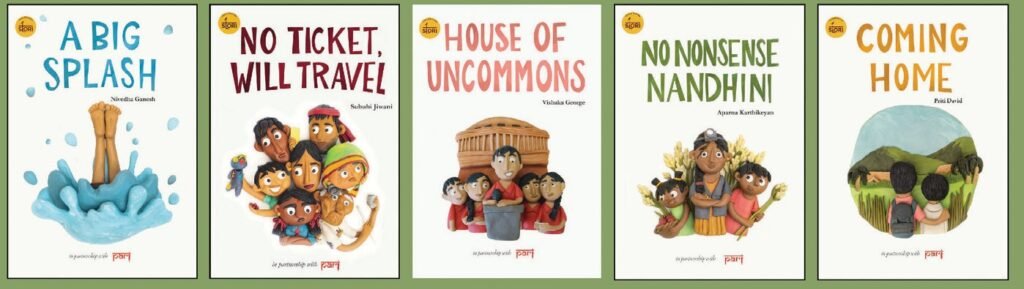
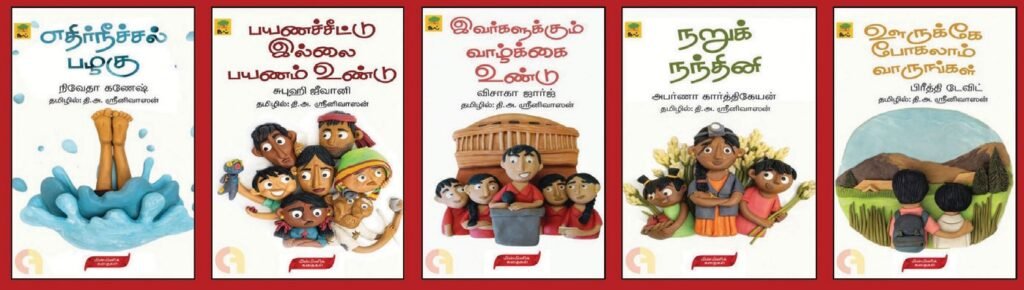
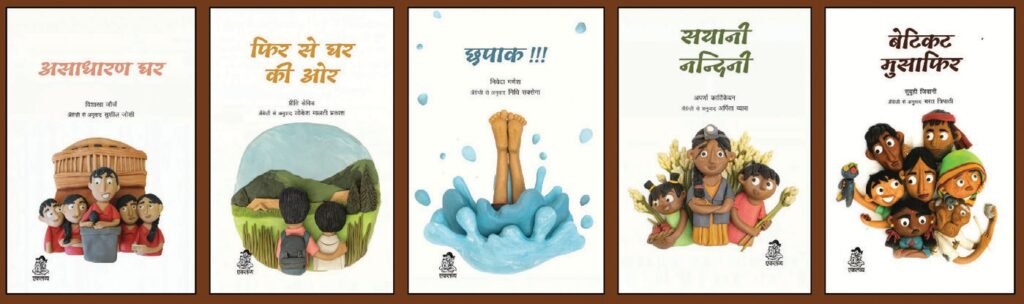 Shobha: We do not translate books in-house. We usually license translation rights to regional and international publishers who then work with translators in their respective languages.
That said, watching our books travel across languages has been deeply interesting. Certain cultural nuances, idioms, rhythms, and wordplay are naturally difficult to carry across exactly.
But what often survives translation and sometimes even grows stronger is the emotional core of a story. Humour, wonder, loneliness, curiosity, and tenderness — these seem to travel remarkably well across cultures.
We have also noticed that stories deeply rooted in a specific place often resonate the most internationally. The more authentic and culturally grounded a story is, the more universally human it sometimes becomes.
AABP: Are Indian children’s book illustrators gaining independent international visibility?
 Shobha: There is definitely increasing international curiosity around Indian visual storytelling and illustration styles.Earlier, international visibility often came primarily through publishers and rights catalogues, but today illustrators also have independent visibility through social media, international exhibitions, residencies, and digital portfolios.There is also growing recognition that Indian illustration is not a singular visual language but an enormously diverse one.
AABP: What do you wish the global children’s book community understood better about the Indian creators you work with?
 Shobha: There is a lot of talent here. Indian authors and illustrators intricately weave their everyday into their work. The stories may emerge from India, but they speak far beyond it.
AABP: How important are international book fairs to your global strategy? Has your relationship with these fairs changed over the years?
Shobha: International book fairs have been extremely important to our global journey. They provide us with a platform not only to showcase our work, but also to engage with the larger world of children’s publishing — to see what is being written, illustrated, and discussed internationally.
Our relationship with these fairs has evolved over the years. On one hand, they have helped us build a rich international network of agents, publishers, and collaborators. On the other hand, consistent participation continues to be challenging for independent Indian publishers because of the significant financial costs involved — travel, accommodation, booth expenses, and logistics — especially when rights sales and collaborations often emerge gradually rather than immediately.
AABP: How much do awards move the needle for you commercially and culturally?
Shobha: Awards function more as cultural validation than commercial drivers for us within India. Internationally, however, recognitions and positive reviews from platforms such as Kirkus and Horn Book have helped our books travel further and reach new readers.
AABP: Is there sufficient government or institutional support in India for publishers seeking to go global? What more is needed?
Shobha: At present, meaningful institutional support for Indian children’s publishers seeking international visibility remains fairly limited. While organizations such as the National Book Trust do make efforts through collective stalls and representation, these often do not allow for the kind of focused visibility or sustained international networking that independent publishers require.
For smaller publishing houses especially, participation in major international book fairs involves significant financial challenges — travel, accommodation, booth costs, shipping, and long-term follow-through. The opportunities these fairs provide are invaluable, but accessing them consistently is not always feasible without support.
What is needed is a more sustained and structured approach to cultural export. Many countries actively subsidize and support their publishers, translators, and creators through grants, collective representation, rights promotion initiatives, and travel support. India has an extraordinary wealth of storytelling and illustration talent, and stronger institutional backing could significantly expand the global presence of Indian children’s publishing.
Personally, some of my opportunities to attend Bologna came through support from the Italian High Commission in India, and experiences like that demonstrate how meaningful such cultural partnerships can be.
AABP: What does the next chapter look like for your house globally?
Shobha: We are looking towards newer markets, particularly within South Asia — Sri Lanka, Thailand, and neighbouring regions that share certain cultural proximities and storytelling sensibilities with India. This expansion will continue organically, depending on access, affordability, and meaningful publishing partnerships from both sides.
At the same time, we also believe that the Indian children’s book market itself holds enormous potential. In many ways, it is larger and more diverse than both the US and European markets combined. Moving forward, a significant part of our energy will continue to go into creating deeply rooted stories for readers within India, while allowing those stories to travel outward naturally.
Comments are closed.